




Select the appropriate grinding wheel based on stone hardness and desired finish. Coarse diamonds handle initial shaping, while fine resin pads achieve mirror polish.
Always match the tooling to the material—granite requires metal-bonded wheels, whereas marble responds better to resin-bonded segments.
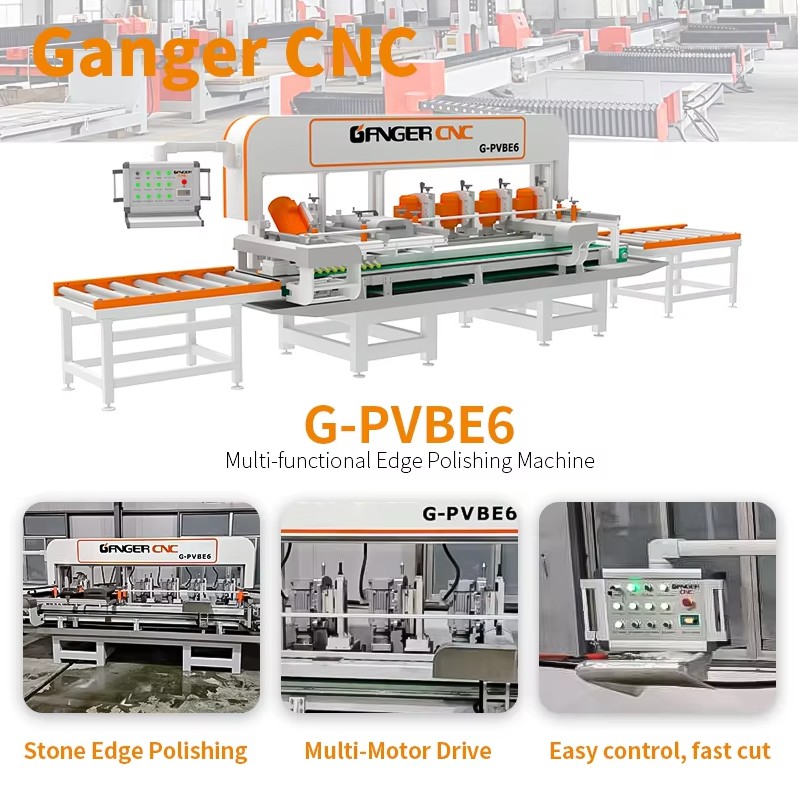
Secure the stone slab firmly on the conveyor belt before activation. Adjust the polishing head height to maintain consistent contact pressure across the entire edge
profile. Uneven pressure causes chipping, waviness, and premature wheel wear, directly compromising the final surface quality.
Monitor water flow continuously throughout the polishing cycle. Adequate coolant prevents thermal damage to both the stone surface and the diamond segments.
Insufficient water leads to overheating, glazing of the grinding wheel, and permanent discoloration along the polished edge.
Perform routine maintenance after every shift. Clean slurry buildup from guide rails, inspect belt tension, and lubricate moving components. A well-maintained
machine delivers uniform edge quality across thousands of linear meters, reducing downtime and extending equipment lifespan significantly.
Leave A Reply

JINAN GANGER CNC TECHNOLOGY CO., Ltd. has rich experience in research, development and production of CNC products. We provide customers with professional products and services in the stone processing industry.
Contact
Leave a Message Online